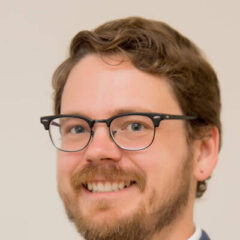
Brandon Warren, PhD
Dr. Warren received his B.S., M.S., and Ph.D. from Florida State University. He then completed a postdoctoral fellowship at the National Institute on Drug Abuse in Baltimore, MD. Dr. Warren’s lab integrates behavioral, biochemical, and microscopic approaches to probe the role of neuronal ensembles (patterns of neurons activated during behavior) in animal models of drug addiction.
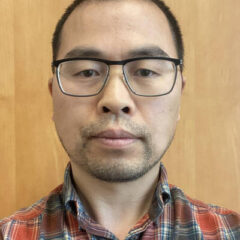
Haiyang Xu, PhD
Haiyang earned his Ph.D. in Cell Biology from the Institute of Zoology, Chinese Academy of Sciences. He brings over a decade of experience studying the neurobiological and epigenetic mechanisms of addiction, with prior research spanning heroin- and cocaine-related behaviors, chromatin architecture, and non-coding RNAs. As a research assistant professor in the Warren Lab, Haiyang investigates Rac1-mediated neuronal ensemble mechanisms in cocaine and fentanyl self-administration using rodent models, with a particular focus on ensemble-specific regulation of drug-seeking behavior in mice.
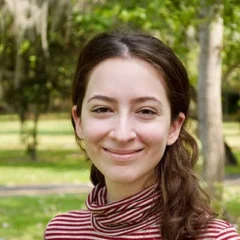
Samantha Rakela
Samantha completed her Bachelor’s degree in Chemistry at Florida International University. Samantha is a former SURF student at the University of Florida. Samantha’s current research interests involve the role of learning and memory in animal models of acquired anxiety disorders.
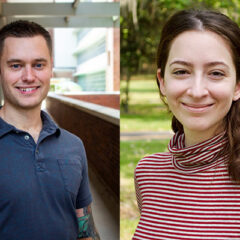
Bo Sortman, PhD
Bo Sortman earned his Ph.D. in the Warren Lab, where he studied how neuronal ensembles form during the acquisition of drug-seeking behavior. His work focused on identifying the specific neural populations that encode early learning processes driving addiction-related behaviors. Bo completed his undergraduate training in Psychology at California State University Long Beach, where he studied behavioral sensitization in rats. He is currently a postdoctoral fellow with Scott Kanoski at University of Southern California, continuing his work in neuropharmacology and motivated behavior.
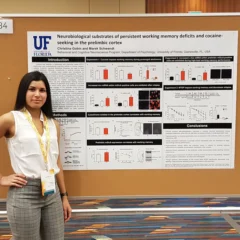
Christina Gobin, PhD
Christina received her PhD in Psychology from the University of Florida where she worked with Dr. Marek Schwendt and studied neurobiological substrates of post cocaine cognitive dysfunction and persistent drug seeking. She is currently studying neuronal ensembles associated with oxycodone reward and extinction memories.
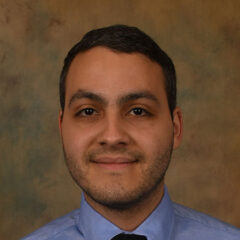
Richard Quintana-Feliciano, PhD
Richard Quintana-Feliciano began his research career at the University of Puerto Rico, where he studied anxiety disorders through clinical and translational research. He later trained as a post-baccalaureate fellow at the National Institute on Drug Abuse, investigating neuronal ensembles involved in cue-induced reinstatement of cocaine and heroin seeking. In the Warren Lab, Richard focused on neuronal ensembles underlying the acquisition of food and cocaine-seeking behaviors. He went on to earn his Ph.D. in Biomedical Sciences from the Icahn School of Medicine at Mount Sinai and is now an Assistant Professor of Biology at Kennesaw State University.
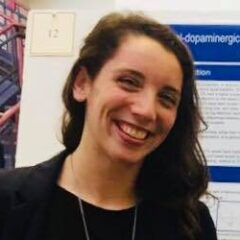
Louisa Kane
Louisa Kane trained as a post-baccalaureate fellow with Dr. Brandon Warren and Dr. Bruce Hope at National Institute on Drug Abuse after completing her undergraduate degree in Biopsychology, Cognition, and Neuroscience at University of Michigan. She studied neuronal ensembles involved in cue-driven behavior, with a focus on food and cocaine-associated learning. Louisa went on to complete her Ph.D. in Clinical Psychology and Behavioral Neuroscience at University of North Carolina at Chapel Hill and is currently completing her clinical internship at the Puget Sound Veterans Affairs Hospital.